Article 86
Performance Monitoring: More Heat than Light?
Westminster Asset Management Investment Strategist Peter Lucas continues his look at practises in portfolio management. In this piece Peter looks at how the industry considers investment performance and argues that not enough consideration is given to how performance has actually been generated.
A global equity manager enters the top quartile after five years of consistently strong performance. Many would see this as the ideal time to invest. Paradoxically, it may be precisely the wrong moment. Not because the manager lacks ability. On the contrary, they may be highly skilled. The problem is that by the time a manager reaches the top of the league tables, the investment style that has driven much of that success may already have enjoyed its moment in the sun. Investors think they are selecting a superior manager when in fact they may simply be buying yesterday's winning style.
This illustrates a broader problem with the way investment performance is often monitored. Performance measurement is one of the cornerstones of good governance. Trustees, investment committees and private investors should hold managers accountable for the decisions they make. Yet too often performance reports generate more heat than light because they fail to distinguish between fundamentally different investment decisions.
Every portfolio reflects a series of choices. First, strategic asset allocation. How much should be invested in equities, bonds, or alternatives? Next, investment style. Cap-weighted or equal-weighted? Value or growth? Quality or momentum? Should currency exposure be hedged? Only after these decisions have been made does the question of manager selection arise.
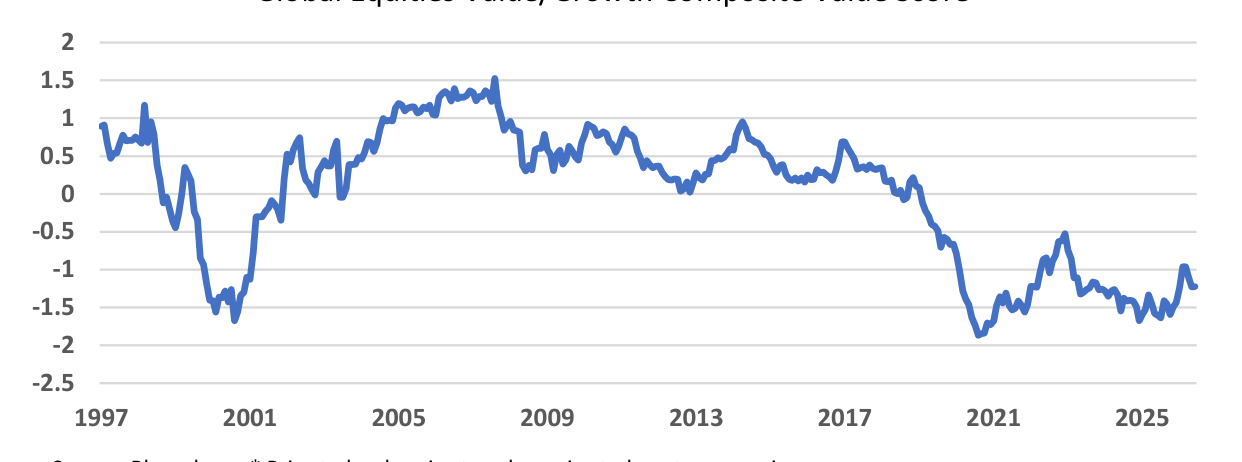
Asset allocation and investment style are forward-looking decisions, informed by long-term evidence, current valuations and macroeconomic analysis. Together, they constitute an investment thesis.
Manager selection is different. Here the question is not whether value will outperform growth, or whether equal-weight will outperform cap-weight. Those decisions have already been taken. The relevant question is whether the chosen manager has implemented the agreed investment philosophy better than their peers and better than an appropriate benchmark.
This distinction is important. Even the most skilful manager may struggle to outperform when their investment style is out of favour for a prolonged period. Equally, an average manager may appear exceptional if the chosen style outperforms. Before judging the manager, investors therefore need to ask a more fundamental question: was the underlying investment thesis the right one?
Unfortunately, these separate decisions – investment strategy and manager selection – are frequently conflated, rather than assessed separately as they should be. Imagine an investor appoints a value manager because they believe value shares are historically cheap and likely to outperform over the coming decade. Three years later the manager trails the S&P 500 by a considerable margin. Has the manager failed? Not necessarily.
If growth stocks have outperformed, the manager may simply have underperformed by sticking to their brief. Judging a value manager against a broad market index tells us little about the quality of their stock selection. It may merely reflect the fact that one investment style has outperformed another.
Equally, consider an equal-weight manager. One of the principal reasons for appointing such a strategy may be to reduce concentration risk and avoid excessive dependence on a handful of mega-cap companies. If those companies turn out to be market leaders, underperformance against a traditional market-cap weighted benchmark would not be surprising. Indeed, it may simply reflect the very characteristic that prompted the appointment in the first place. In both cases, the danger is that style performance is interpreted as a lack of manager skill (which can only be judged with reference to appropriate style benchmarks).
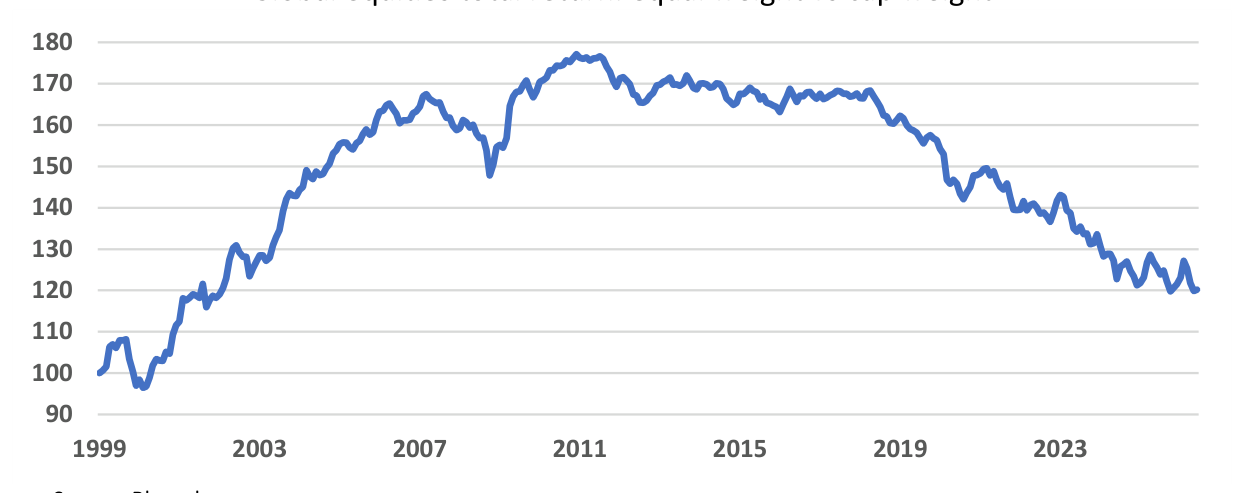
Of course, the opposite problem occurs when styles come back into favour. After several years of strong returns, value managers begin climbing the performance rankings. Consultants highlight them in quarterly reports. Investors allocate fresh capital. Yet by this stage, the valuation opportunity that originally made value attractive may have narrowed considerably. Investors believe they are selecting the market's best managers, when in fact they are arriving late to a style cycle that has already been running for years. The manager receives the credit for decisions largely driven by style. Later, when the cycle turns, the same manager receives the blame.
This helps explain why investors so often end up chasing performance despite knowing they should not. League tables naturally reward what has worked recently. Investment styles, however, move in long cycles. By the time recent outperformance becomes sufficiently obvious to dominate the rankings, much of the opportunity may already have passed.
Evaluating wealth managers introduces more layers of complexity. Unlike specialist managers, they make several decisions simultaneously. Strategic asset allocation, geographic exposure, currency hedging, active versus passive implementation, manager selection and security selection all influence returns. If performance disappoints, which decision was responsible?
This is where performance attribution becomes invaluable. In principle, attribution seeks to separate the contribution from each investment decision. In practice, however, it is technically demanding, data intensive and often difficult to communicate clearly. That helps explain why consultants frequently simplify the problem by grouping managers into broad risk categories. The attractions of that type of approach are clear. Simplicity makes reporting more accessible and promotes consistency across portfolios. However, there is a real risk that such comparisons between managers pursuing different investment philosophies will tell us little about genuine investment skill.
In short, performance assessment should mirror the way in which the portfolio was constructed in the first place. There should first be an assessment of whether the original investment thesis remains valid, considering changes in valuations, macroeconomic conditions and the investor's objectives. Only then should managers be assessed against style-appropriate benchmarks.
The manager is not the investment thesis. The manager is the way in which the investment thesis is expressed. Performance monitoring remains one of the most important disciplines in investment management. But its purpose is not simply to identify yesterday's winners and losers. Its purpose is to improve tomorrow's decisions.
Done well, performance monitoring sheds light on where value has genuinely been added. Done badly, it merely tells us who happened to be on the right side of the last market cycle.