Article 74
Is America really the weakest link?
Westminster Asset Management Investment Strategist Peter Lucas takes a look at the currency markets. Peter wonders if the prevailing consensus view that the US Dollar will continue to weaken really makes sense.
The bear case for the US dollar is so obvious it almost writes itself. An erratic president who relishes tariffs; massive current-account and fiscal deficits; historic overvaluation; a dovish Federal Reserve; the dollar index breaking key technical levels; and a stock-market bubble to boot. Futures positioning is not extreme, but most commentary on the 2026 outlook is at least modestly negative.
And yet, is the situation in America really that bad relative to the rest of the world? After all, there are two sides to every exchange rate.
I have said it before and will say it again: Donald Trump’s policy agenda is bad for Europe. At every turn, he has tightened the screws by abandoning the expensive ideals Europe holds dear – Net Zero, supranational institutions such as the World Health Organization, and diversity-driven initiatives – while simultaneously scaling back America’s commitment to defend the Old Continent.
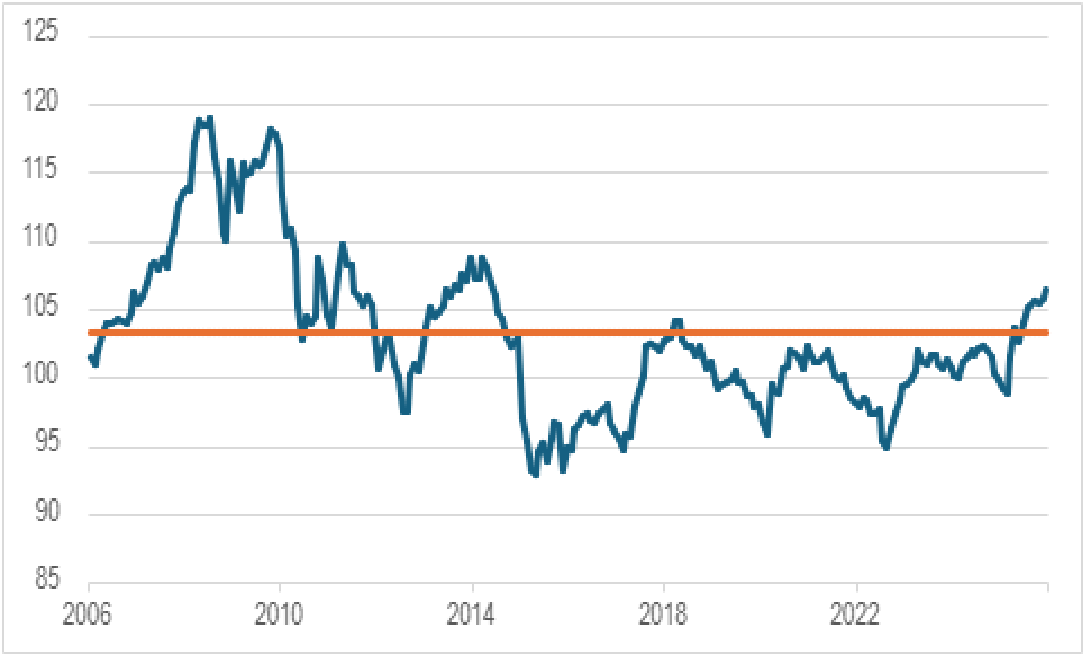
The result has been a forced increase in European fiscal spending, pushing bond yields higher relative to those in the United States. It is this widening in spreads – rather than any sudden rediscovery of European dynamism – that has been the principal driver of a stronger euro and a weaker dollar.