Article 42
Down but not out
Down but not out: value and the FTSE 100 have given back some of their 2021-22 outperformance, but the long-run prospects for both are much brighter according to Westminster Asset Management’s Investment Strategist Peter Lucas.
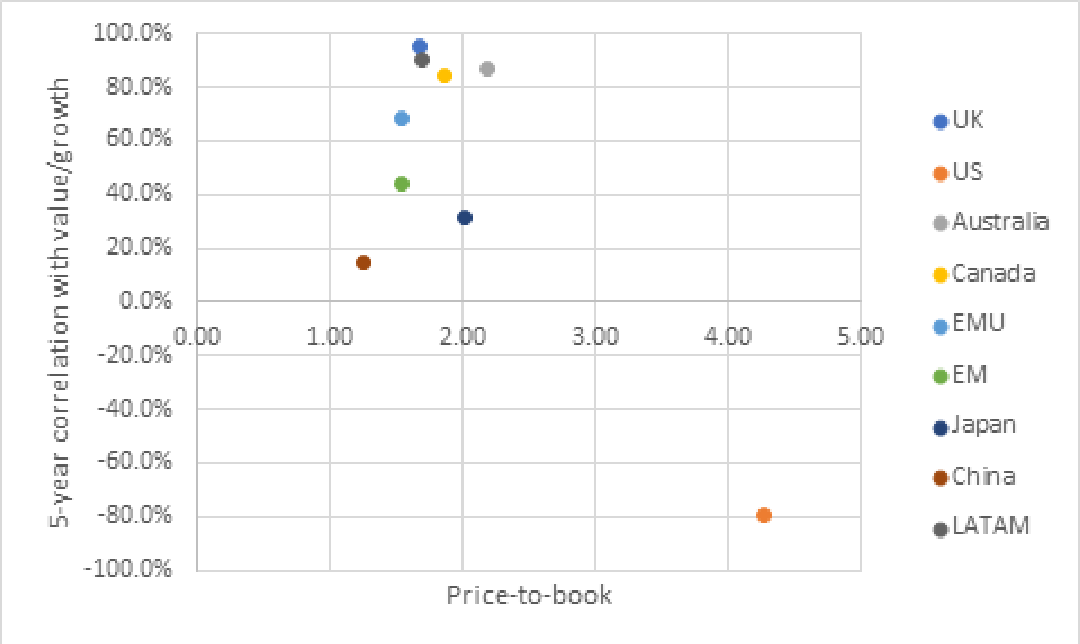
In 2020 I predicted that rising inflation and bond yields would lead to improved relative performance from beaten-up value equities. I also said that there would be better times ahead for the UK FTSE 100, which had underperformed the World Index for thirty-plus years. These predictions were different sides of the same coin. The FTSE 100 is dominated by value-type companies, and hence when value is outperforming there is a tendency for the FTSE 100 to do the same. Indeed, the correlation between the relative of the FTSE 100 versus global markets (currency adjusted) and the global value/growth ratio has been well over 90% in the past 5 years. In 2021-22, as bond yields and commodity prices soared, the FTSE 100 did indeed outperform, beating the World Index by around 10%. However, it has been a very different story in 2023, with the FTSE 100 slipping behind, particularly in the last few weeks.
The recent underperformance of the FTSE has both global and domestic drivers. Predictably, as the odds of a US recession have shortened, investors have rotated from value into growth, and from small caps into large, leaving large cap growth as the clear winner. This rotation has been given added impetus by the launch of ChatGPT and the emergence of Artificial Intelligence (“AI”) as the story of the moment. Incidentally, I predicted that growth could outperform for a while in my New Year review, but it is fair to say that its recent performance has exceeded expectations by a good margin.
Inflation is finally trending lower in most developed economies, but less so in the UK. Indeed, the UK-US inflation gap is currently close to a 46-year high. This has caused gilt yields to revisit the ‘Truss’ highs of 2022 and given rise to fears that interest rates will have to rise a lot more to get inflation under control. Even for big global companies, local borrowing costs are an important consideration.
Looking ahead there are good reasons to be optimistic about the prospects for both value and the FTSE 100:
- The valuation gap between growth and value is back to the high end of the historic range and although history demonstrates the danger of calling time on manias, it seems likely that value will outperform growth in the long run.
- For all the reasons cited in past strategy notes, the current downtrend in inflation is expected to be a period of temporary relief rather than a return to the low inflation of the pre-COVID period. And value tends to beat growth when inflation is elevated.
- The commodity index is down over 30% since its March 2022 high. In 2022 the main driver
was the Chinese COVID-lockdown, but this year the focus of commodity bears has shifted to growing risks of a US recession. However, from hereon in the downside risks are probably limited, as the Chinese economy gradually recovers in the presence of low commodity inventories. Rising commodity prices are directly beneficial for value sectors like energy and basic materials, and indirectly beneficial for the broader value universe, given their impact on inflation.
- Despite widespread strike action, the recent widening in inflation differentials between the UK and elsewhere should ultimately prove to be a short-term phenomenon rather than a post-BREXIT structural change. Inflation was lower in the UK than in America and the Euro area as recently as March 2022. Has anything fundamentally changed in the interim? I don’t think so.
In conclusion, although there is a risk that value and the FTSE 100 continue to underperform in the short-term due to a US recession and/or a disappointing China recovery, the longer-run prospect for both are much brighter.