Article 38
Fading Attraction
Our Investment Strategist, Peter Lucas, ex-Landlord and previous Chair of the Jersey Landlords Association compares property investment to financial investment in Part 1 or a 2 Part series.
In this article I take a closer look at residential property as an investment. Why is property such a magnet for investors’ savings? And what are the positives and negatives associated with it as an investment?
Let us first consider the positives:
1. Attractive risk-reward. On the face of it, property has bestowed equity-like total returns with lower volatility and smaller drawdowns (see chart below). However, (a) countrywide statistics disguise significant regional variations, (b) there are lots of costs associated with property investment that are not included in this chart (more on that shortly) and (c) its volatility is probably understated due to a lack of price transparency, particularly in difficult markets.
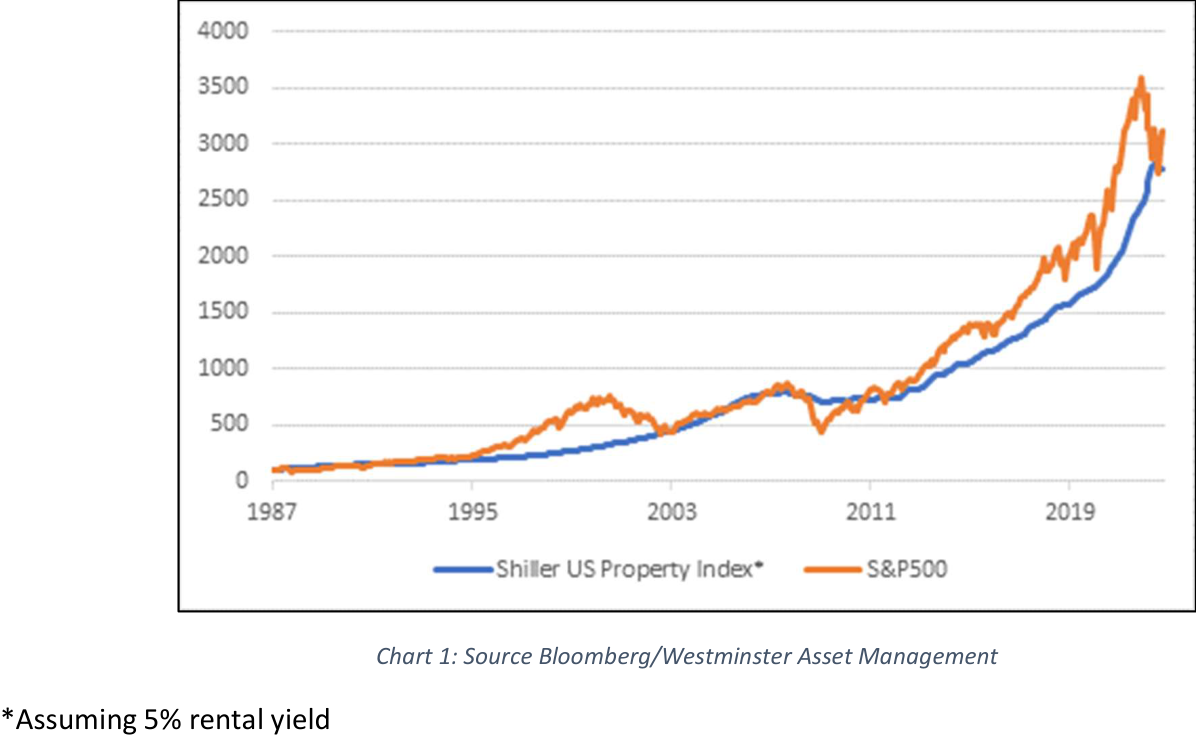
Chart 1: Source Bloomberg/Westminster Asset Management
- Real asset. Property prices tends to rise with household incomes in the long run and hence property is a good way to hedge against inflation and to benefit from rising living standards.
- Ability to leverage. Property is one of the few assets that banks will readily lend against, which means that investors can leverage their position, often at very reasonable cost.
- Easy to understand. Many are wary of financial assets like bonds and equities, viewing them as too complex and something for the experts. Property on the other hand, is seen as being much more accessible (although increasing regulation means that it is more complicated now than it used to be
- see below).
How about the negatives?
- Difficult and costly to trade. An ETF can be sold in minutes and at minimal cost. In contrast, properties can take weeks or even months to sell and at much higher cost (commissions, stamp duty, and legal fees). Furthermore, as anyone that has bought a property will attest, it can be a very stressful experience.
- Bad tenants. Tenants that damage the property, fail to keep up with the rent, and/or refuse to vacate can be a real headache. There is a process for dealing with bad tenants, but it is complicated and time consuming. Thankfully, bad tenants are in the minority, but it is a risk that must be allowed for.
- Tenants leaving. There will inevitably be some turnover of tenants, and each time one leaves, there is the risk of the property remaining unlet for a period, plus there may be costs associated with finding a new tenant.
- Hard to value. For some, ignorance is bliss. But for others, it is important to be able to mark-to-market on a regular basis.
- Government regulation. In theory, it is good that governments are committed to rooting out bad landlords and to promoting minimum standards of accommodation. In practice, experience tells us that they are not very good at it. Regulation is often poorly conceived, poorly drafted, and overbearing.
- Depreciation. Every property needs maintenance through time. Although such work will often be tax-deductible, it is a cost that does not apply to financial assets.
- Political football. When equity markets rise, few people complain. But when property prices go up, there will soon be people bemoaning the high level of rents and the plight of first-time buyers. And if prices rise enough, governments usually feel the need to get involved, with predictably bad outcomes.
- Sitting duck for tax. Property cannot be uprooted and relocated. Furthermore, significant price rises have bestowed windfall gains to the ‘haves’ and higher rents for the ‘have nots.’ For all these reasons, property is now a sitting duck for higher taxes, particularly where governments are strapped for cash.
- Poor diversification. Small and medium-sized property investors typically invest on their own doorstep. It is a market they know, and it is within easy reach. However, it is not a good idea to put all your eggs in one basket and it is much easier to diversify internationally with financial assets.
| Jersey rental property | Financial assets1 | |
| Purchase costs | ||
| Stamp duty | £54,500 | £3,000 |
| Legal fees | £3,000 | |
| Commission | £1,000 | |
| Cost of finding new tenant | £4,000 | |
| Totals | £61,500 | £4,000 |
| Annual costs | ||
| Portfolio manager | £10,000 | |
| Managing agent | £3,000 | |
| Maintenance | £10,000 | |
| Regulatory obligations | £1,000 | |
| Purchase costs (spread over 5 years) | £12,300 | £800 |
| Totals | £26,300 | £10,800 |
| Income | ||
| Rent | £40,000 | |
| Dividend and bond interest | £35,000 | |
| Costs | £26,800 | £10,800 |
| Net income | £13,200 | £24,200 |
The table above shows estimates for the positive and negative cashflows of a £1m Jersey residential property investment and those of an equivalent-sized portfolio of financial assets. Some may disagree with the exact numbers used, but I think that the overall message is broadly right. Note that the property column includes the new 3% stamp duty surcharge, which now applies to purchases of ‘second homes.’ The bottom line of the table should be food for thought for anyone that is already a landlord or thinking about becoming one.
As much as I enjoyed being a landlord, I could not ignore the clouds that were gathering on the horizon and just five years after acquiring my first investment property, I sold up and returned to the world of financial assets. In my next article, I explain why.
1 Portfolio of bonds and equities