Article 16
Final Piece of the Jigsaw
Investment Strategist Peter Lucas continues to develop his outlook for bond yields and the consequent impact of higher yields on markets.
For nine long months, bonds steadfastly refused to confirm the growing optimism of the equity and commodity markets. They always looked to be on the wrong side of the debate, but even so, it is reassuring to see them now moving in the right direction. The technical breakout looks clear, but Central Banks will likely intervene at some point to slow or reverse the uptrend in yields. These actions will pump more liquidity into the markets, which in time will push up inflation and bond yields. The medium-term outlook for equities and commodities remains positive, but the way ahead is likely to be increasingly turbulent.
The S&P 500 broke above its February high in August, thereby signalling the end to one the sharpest and shortest bear markets on record. Meanwhile, the bond markets continued to trade serenely sideways, apparently oblivious to what was going on elsewhere. Positive vaccine trial results in November led to a brief flurry of activity, but even that game-changing news was not sufficient to cause yields to break out of their range. But over time the pressure for an upside break gradually increased: the rollout of vaccination programs, raising hopes of a proper end to the COVID fug; rising commodity prices and the approach of the anniversary of the 2020 low, raising fears of a jump in inflation (short-lived or otherwise); and FOMO, fear of missing out on rampant bull markets in more glamourous assets.
And then it finally happened. In January, the US 10-year yield finally broke above the high end of its post-March range, followed in February by technical breakouts by its German and UK equivalents. Since then, the follow through has been impressive if not (yet) dramatic. Year to date, 10-year yields are up 45 basis points in America, 25 in Germany and 54 in the UK. The latter move is impressive and has much to do with the ending of Brexit uncertainty and perhaps more importantly, the UK’s success in rolling out the vaccine.
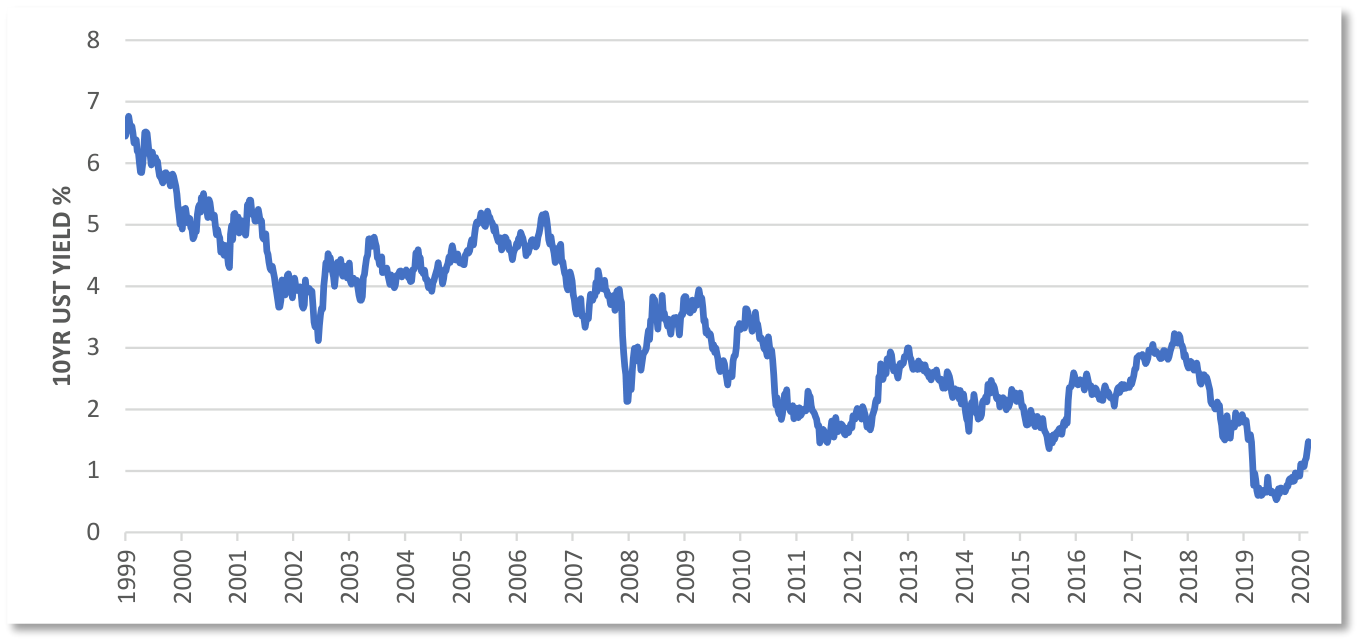
Chart 1: 10 Year US Treasury Bond Yield 31/12/1999 to 26/2/2021 (Source: Bloomberg/Westminster Asset Management)
How high could/should bond yields rise? There are several ways that we can answer that question, and here are a couple. Historically one of the best valuation yardsticks for bond yields has been a 7-year average of historical nominal GDP growth (i.e., not adjusted for inflation). That makes sense because one would expect the cost of capital to oscillate around the return on capital in the long run. In the past fifty years, prior to COVID, the US 10-year has been anything from 2.6% below that measure (in the 2008 financial crisis) to 5% above (the fight against inflation, 1981). Even after the recent rise, the 10-year yield is currently 1.9% below 7-year GDP, which is 1.5% below the 1966-20 average and 0.7% below the 2000-20 average.
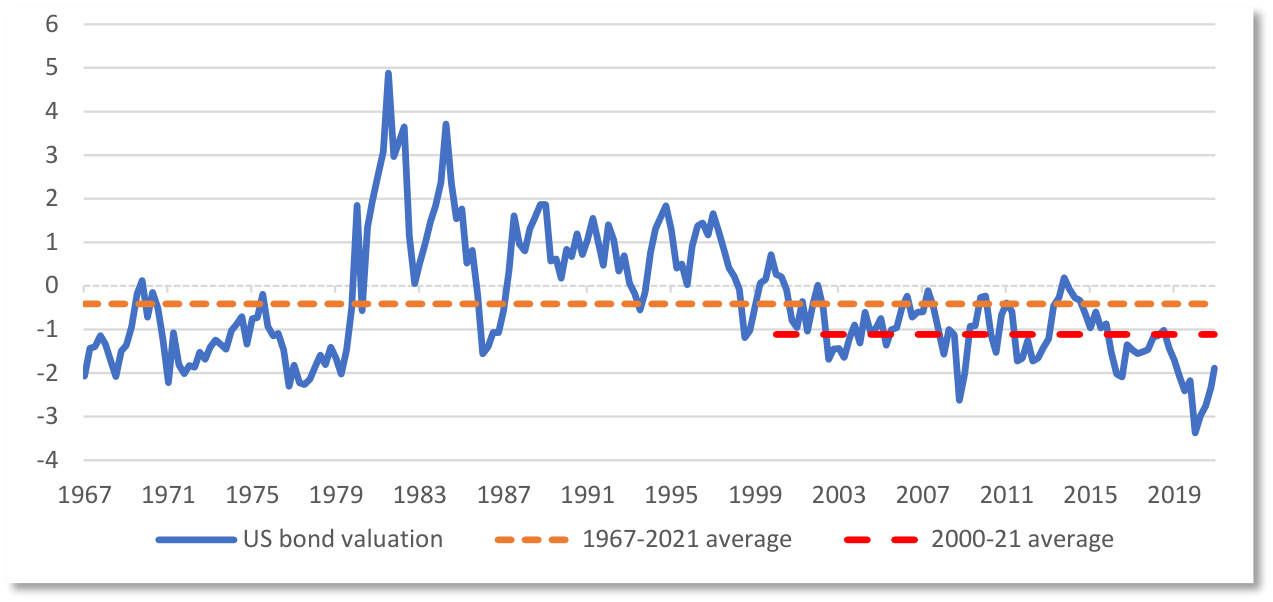
Chart 2: US 10 Year Treasury Bond Yield minus 7 Year GDP (Source: Bloomberg/Westminster Asset Management)
Another technique we can use is to compare the US 10-year yield to the copper-gold ratio (see also: Treasury yields – do we have lift off? December 2020). The two series have correlated 86% in the past five years. Again, this makes sense because copper is a cyclical asset and gold is a defensive asset, and hence a rising ratio is indicative of a cyclical upturn. By regressing the bond yield on the copper-gold ratio using data for 2016-21, we obtain a 10-year estimate of 2.6% (1.3% above current levels).
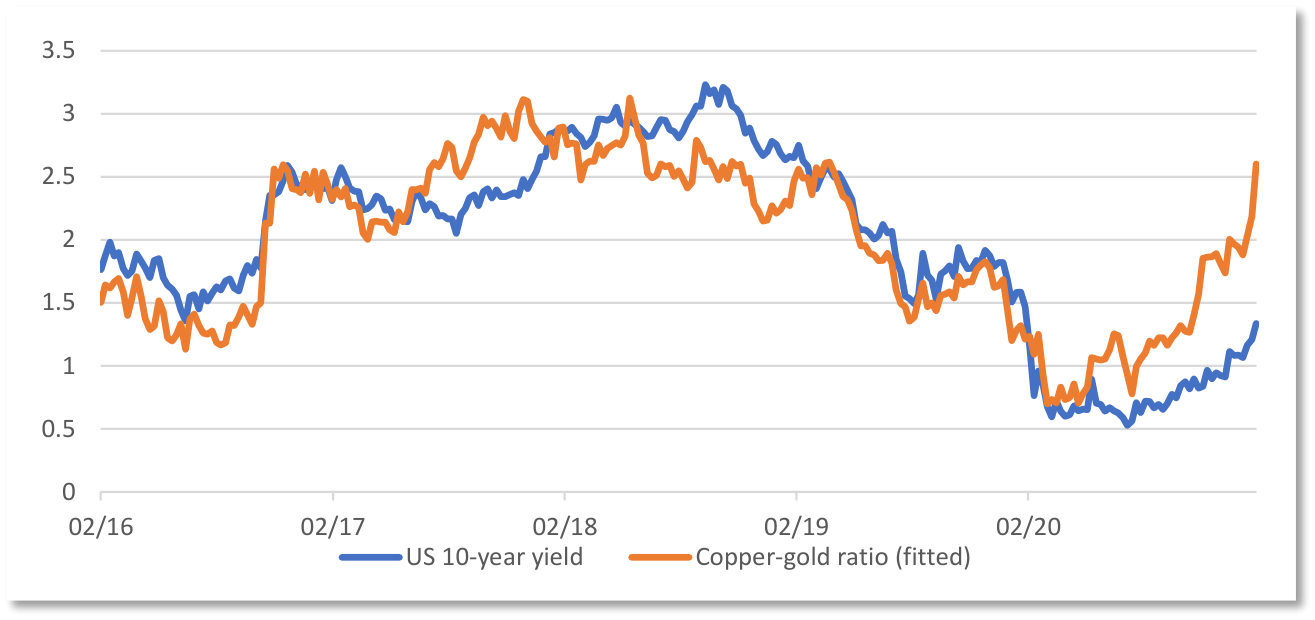
Chart 3: US 10 Year Treasury Bond Yield versus Copper/Gold Ratio (Source: Bloomberg/Westminster Asset Management)
In short, these two techniques suggest that the US 10-year yield could rise 1%, and that would just to take it back to some sort of equilibrium level (which would translate into a price decline of 9-10%). It could of course overshoot. Such a move would have consequences way beyond the bond market. Many assets are currently priced on the assumption that interest rates will remain low for a very long time. Furthermore, stretched government finances are only sustainable if bond yields remain low.
The Central Banks know this and are keen to prevent bond yields rising too much, for fear of the recovery being snuffed out before it has had a chance to gain traction. We have already seen direct action by the Reserve Bank of Australia (more bond buying) and the ECB (verbal intervention) and if bond yields continue to rise, we will see more of the same. The problem is that direct intervention – keeping short-term rates low, letting the economy letting run hot and/or buying bonds – will tend to have inflationary consequences that will be unsettling for markets and will ultimately result in higher bond yields in the long run. In short, policy makers seemed to be caught in a ‘Catch 22’ situation.
That is why market volatility will only go one way from here. Note that rising volatility will place added upward pressure on bond yields because of its impact on the term premium (the extra yield that investors demand over and above expected path for short-term interest rates) which is currently very low by historical standards. And in turn, steeper yield curves will incentivise banks to lend more (they borrow short and lend long, so a steeper curve means juicier margins), which will mean accelerating monetary growth and in time, more growth and/or inflation. In short, the breakout in bond yields is a big deal because it marks the beginning of the next exciting phase of the story.
What does all this mean for investment strategy? Although the rise in bond yields will likely prove to be a stair-step progression, the change in trend is triggering a major rotation within the equity markets. Low bond yields have been great news for growth stocks, which have long, stable earnings streams that increase in value as long-term interest rates fall. Rising bond yields will see the focus shift to more cyclical value companies, that also have the distinction of being relatively cheap, even by their own standards. Investors looking for ways to participate in the value story could do worse than buy the FTSE 100, an index that is stuffed full of the sort of shares that should thrive in this environment and one that is thought by many to be the cheapest developed world market (denominated in one of the cheapest currencies). Finally, if Central Banks do intervene in the bond market, directly or otherwise, it could be good news for precious metals and precious metal producers, which have spent the last six months moving sideways and down, but now look poised to resume their uptrend.